
Why the Victron Lynx Distributor Is on the Homestead
Once you have consolidated your battery bank with the Lynx Power In, you need a way to distribute that power to your inverter, charge controllers, DC loads, and charging sources. The Victron Lynx Distributor (M10) does that with four fused output positions, each accepting a MEGA fuse. It is the central hub where every DC circuit in the system gets its own protection.
I use the Lynx Distributor as the distribution point after my battery bank consolidation. The main inverter feed comes off one position, and other positions handle charging sources and DC loads. Each circuit has its own MEGA fuse, so if one circuit faults, it does not take down the whole system.
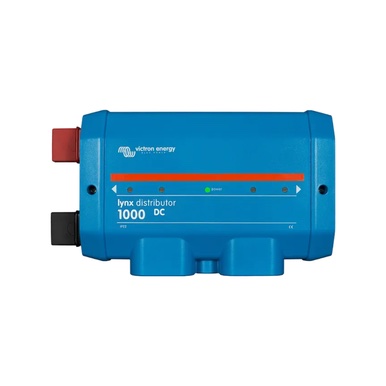
What Is the Lynx Distributor?
The Lynx Distributor is part of the Victron Lynx modular DC distribution system. It sits between your battery bank and your loads. The key features:
- Four fused positions: Each output has a MEGA fuse holder for individual circuit protection
- 1000A busbar: The internal copper busbar handles up to 1000A continuous
- LED indicators: Each fuse position has an LED that lights if the fuse blows, making troubleshooting fast
- Modular connection: Snaps directly to other Lynx modules for a continuous busbar
- M10 studs: Accepts up to 4/0 AWG ring terminals
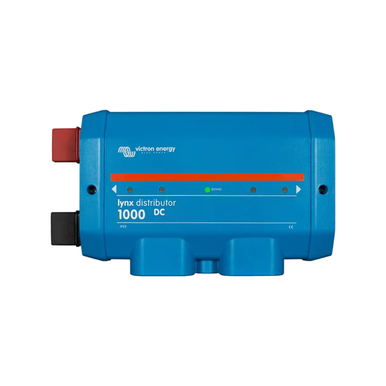
How I Use It on My System
The Lynx Distributor sits right after the Lynx Power In in my system:
- Six EG4 rack LFP batteries feed into a bus bar
- Bus bar connects to the Victron Lynx Power In (M10)
- Lynx Power In feeds the Lynx Distributor (M10)
- Distributor outputs go through the Nader DC breaker
- Breaker feeds through the Blue Sea 5502 with a 250A Class T fuse
- Fuse feeds 4/0 AWG cable to the EG4 12000XP inverter
Specifications
- Current rating: 1000A continuous busbar
- Fuse positions: 4 (accepts MEGA fuses, not included)
- Terminal studs: M10 (3/8″-16), torque to 33Nm
- Max cable size: 4/0 AWG ring terminals
- Construction: Anodized aluminum housing, copper busbars
- LED indicators: One per fuse position, illuminates on fuse failure
- Modular: Snaps to other Lynx modules
Installation Tips
- Torque to 33Nm: Same as all Lynx M10 modules. Use a calibrated torque wrench on every connection.
- Size MEGA fuses to the wire: Each fuse protects the downstream wire. Continuous load should not exceed 80% of the fuse rating.
- Check LED indicators: If an LED lights up, that fuse has blown. Replace with the same amperage MEGA fuse, not a higher one.
- MEGA fuses are for overcurrent, not fault protection: A MEGA fuse has a lower AIC than a Class T. Use a Class T fuse at the battery bank level for short-circuit protection, and MEGA fuses for downstream circuit protection.
Pair It With
The Lynx Distributor pairs with the Victron Lynx Power In (M10) for battery consolidation. You will also need MEGA fuses for each output position, sized to match your downstream wire. For the main inverter feed, a Blue Sea 5502 Class T fuse block with a 250A Class T fuse provides the fault protection the MEGA fuses cannot.
Check out the latest pricing:
Signature Solar
Discount Code:
Auto $50 Discount With Link


Share
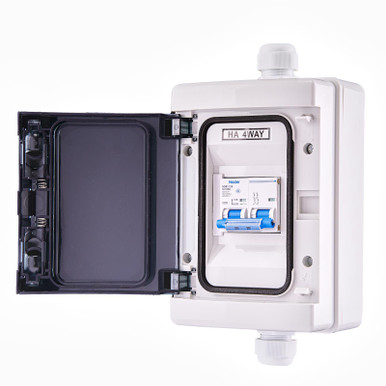
Nader DC Circuit Breaker 60V 200Amp with Enclosure
Why This Breaker Is on the Homestead A Class T fuse handles short-circuit fault protection, but…

Blue Sea Systems 5118 Class T 250-Amp Fuse
Why Blue Sea 5118 Class T 250-Amp Fuse Is on the Homestead Overcurrent protection is not…
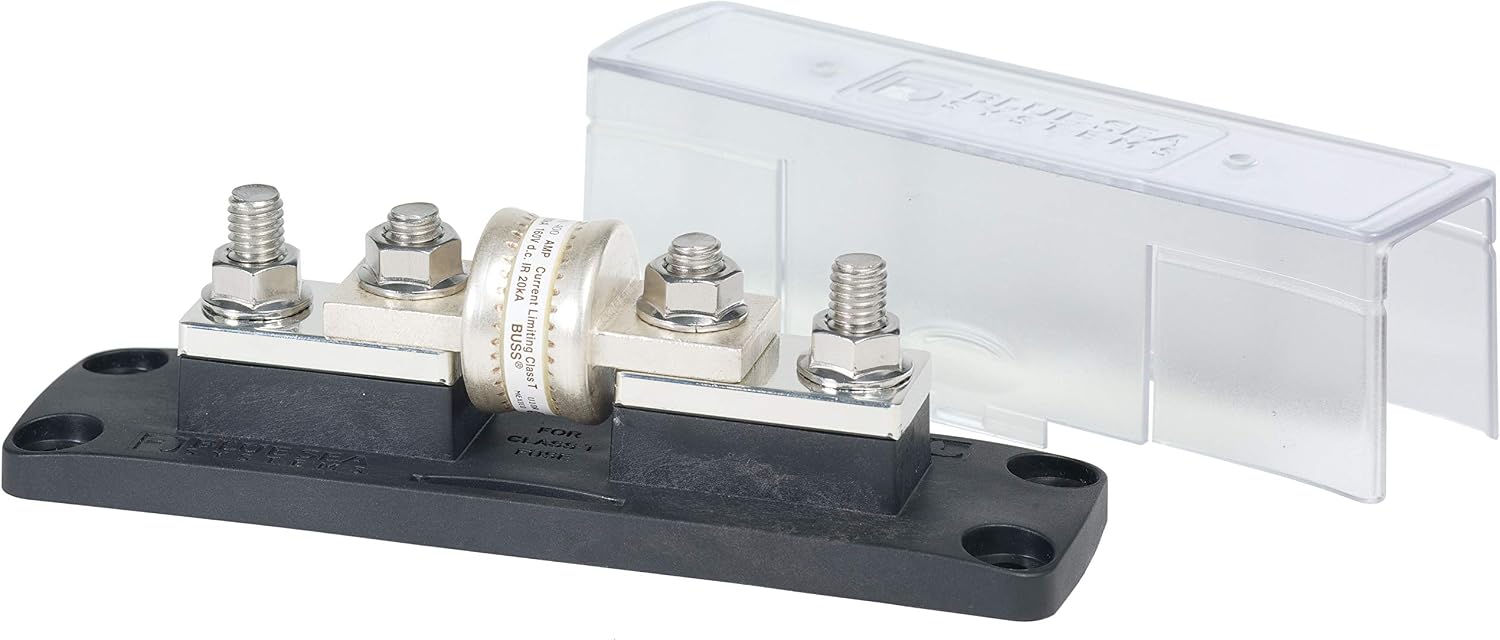
Blue Sea 5502 Fuse Block Class T 225-400 Amp
Why This Fuse Block Is on the Homestead When you’re building a high-current battery bank for…