Home Battery Backup
FCC Bans New Foreign-Made Solar Inverters: Complete Guide for DIY Solar (2026)
Eric - East Texas Homestead
July 30, 2026
Yes, the FCC Just Banned New Foreign-Made Solar Inverters. No, Your Current System Is Fine.
TL;DR: On July 28, 2026, the FCC banned new foreign-made solar inverters from receiving FCC approval, but every inverter already on the market today is still completely legal to buy, sell, and use.
On July 28, 2026, the Federal Communications Commission (FCC) officially added foreign-produced power inverters to its Covered List, which is the federal list of equipment considered a threat to national security. This means new solar inverter models manufactured outside the United States can no longer receive FCC equipment authorization for import or sale in the US. If you have seen YouTube videos with scary headlines about a “grid lockout” or an “absolute ban on solar inverters,” I understand the concern. So I read through the actual government documents, the National Security Determination, the FCC press release, and the industry coverage to figure out what this really means for those of us doing DIY solar and off-grid battery backup systems.
Here is the short version first, and then we will walk through the details with full sourcing so you can verify everything yourself.
We Broke This Down on Unplugged LIVE
Want the full conversation? We broke this down in detail on Unplugged LIVE. Watch the replay above, and subscribe so you catch the next one.
Table of contents
- Yes, the FCC Just Banned New Foreign-Made Solar Inverters. No, Your Current System Is Fine.
- We Broke This Down on Unplugged LIVE
- The Short Version: What the FCC Solar Inverter Ban Means for DIY Solar
- What the FCC Actually Did: The Covered List Explained
- What Does NOT Change Right Now: Existing Inverters Are Still Legal
- Does the FCC Inverter Ban Affect Off-Grid or Just Grid-Connected Inverters?
- Is the FCC Inverter Ban Country-Specific? No, It Applies to ALL Foreign Inverters
- What Counts as “Foreign-Produced”? The 65% Buy American Rule
- When Does the FCC Inverter Ban Go Into Effect? A Staged Timeline
- Will the FCC Inverter Ban Create a Supply and Demand Problem for Solar?
- Why the Government Did This: Solar Inverter Security Concerns
- What the FCC Inverter Ban Means for DIY Solar: Specific Brands
- The Bottom Line: What DIY Solar Folks Need to Know About the FCC Inverter Ban
- Watch the Full Video Breakdown
- Complete Source List: FCC Inverter Ban
- YouTube Comments
- FCC Inverter Ban FAQs
Estimated reading time: 24 minutes
The Short Version: What the FCC Solar Inverter Ban Means for DIY Solar
- This is real. It is not fake news or YouTube hype. The FCC published official documents on July 28, 2026, adding foreign-produced power inverters to the Covered List.
- Nothing changes right this minute for you. Every solar inverter currently on the market that already has an FCC ID is still legal to buy, sell, import, and use. Your EG4 6000XP, EG4 12000XP, Growatt, Sol-Ark, Victron, or any other currently approved inverter is completely unaffected.
- The ban only applies to NEW inverter models. If a manufacturer has not yet gotten FCC approval for a new inverter design, and that inverter is made overseas, it is now blocked from receiving FCC authorization.
- It is NOT a China-only ban. It applies to ALL foreign-made inverters, including those from Germany (SMA), Austria (Fronius), the Netherlands (Victron), and anywhere else outside the US.
- Off-grid inverters are not explicitly exempt. The rule targets any inverter with Wi-Fi, Bluetooth, or cellular communication capability. Most modern off-grid inverters have that, even ones used in standalone DIY solar battery backup systems.
- There is an escape hatch. Manufacturers can apply for Conditional Approval by January 1, 2028, if they commit to moving production to the US and open their supply chain to federal auditors.
- Supply issues are coming, but not today. Wall Street analysts at TD Cowen and Jefferies are calling this a “non-event” for now. The real impact hits in 1 to 3 years when current inverter models become obsolete.
I am not telling you to rush out and buy inverters right now. That is not the point of this article, and it is not the reality of the situation. Current models are still flowing through the supply chain normally. Keep reading to understand why.
What the FCC Actually Did: The Covered List Explained
TL;DR: The FCC added foreign-produced power inverters to its Covered List, the same federal mechanism used to ban foreign drones like DJI, and foreign routers, which blocks new foreign inverter models from receiving FCC equipment authorization.
The FCC maintains something called the Covered List, which is the official government list of communications equipment deemed to pose national security risks. The list already included Huawei, ZTE, Hytera, Hikvision, Dahua, Kaspersky Lab, foreign-produced drones (added December 2025), and foreign-produced consumer routers (added March 2026). On July 28, 2026, the FCC added a new entry: foreign-produced power inverters.
Under the Secure Equipment Act of 2021, once equipment is on the Covered List, the FCC is prohibited from granting new equipment authorizations for it. Since virtually all inverters with wireless capability require FCC authorization under Part 15 rules (for unintentional radiofrequency emissions), this effectively blocks all new foreign-made inverter models from legal import and sale in the United States.
The trigger was a National Security Determination made by an unnamed executive branch interagency body convened by the White House. FCC Chairman Brendan Carr publicly supported the move, stating: “I welcome these Executive Branch national security determinations, and I am pleased that the FCC has now added foreign produced advanced robotics and power inverters to the FCC’s Covered List.”
“The lack of a secure U.S. supply chain for inverters and the continuous inflow of foreign-produced or controlled inverters and inverter components poses threats to U.S. economic and national security.”
FCC National Security Determination for Power Inverters, July 27, 2026
Primary sources:
- FCC Covered List page (updated July 28, 2026)
- FCC National Security Determination for Power Inverters (PDF, July 27, 2026)
- FCC Press Release (DOC-423682A1, July 28, 2026)
- FCC FAQ page on foreign-produced inverters and robotic devices
What Does NOT Change Right Now: Existing Inverters Are Still Legal
TL;DR: Every inverter that already has an FCC ID is still legal to buy, sell, import, and use, and Wall Street analysts are calling this a non-event for the current market.
This is the part I want to make very clear. I am not trying to scare anyone into running out and buying inverters today. The FCC press release explicitly states the following:
- This does not prohibit the import, sale, or use of any existing inverter models that the FCC previously authorized.
- This does not affect any previously purchased devices. If you already own it, you are fine.
- This does not prevent retailers from continuing to sell, import, or market relevant models approved previously through the FCC equipment authorization process.
- This does not impact purchase or use by the federal government or federal agencies.
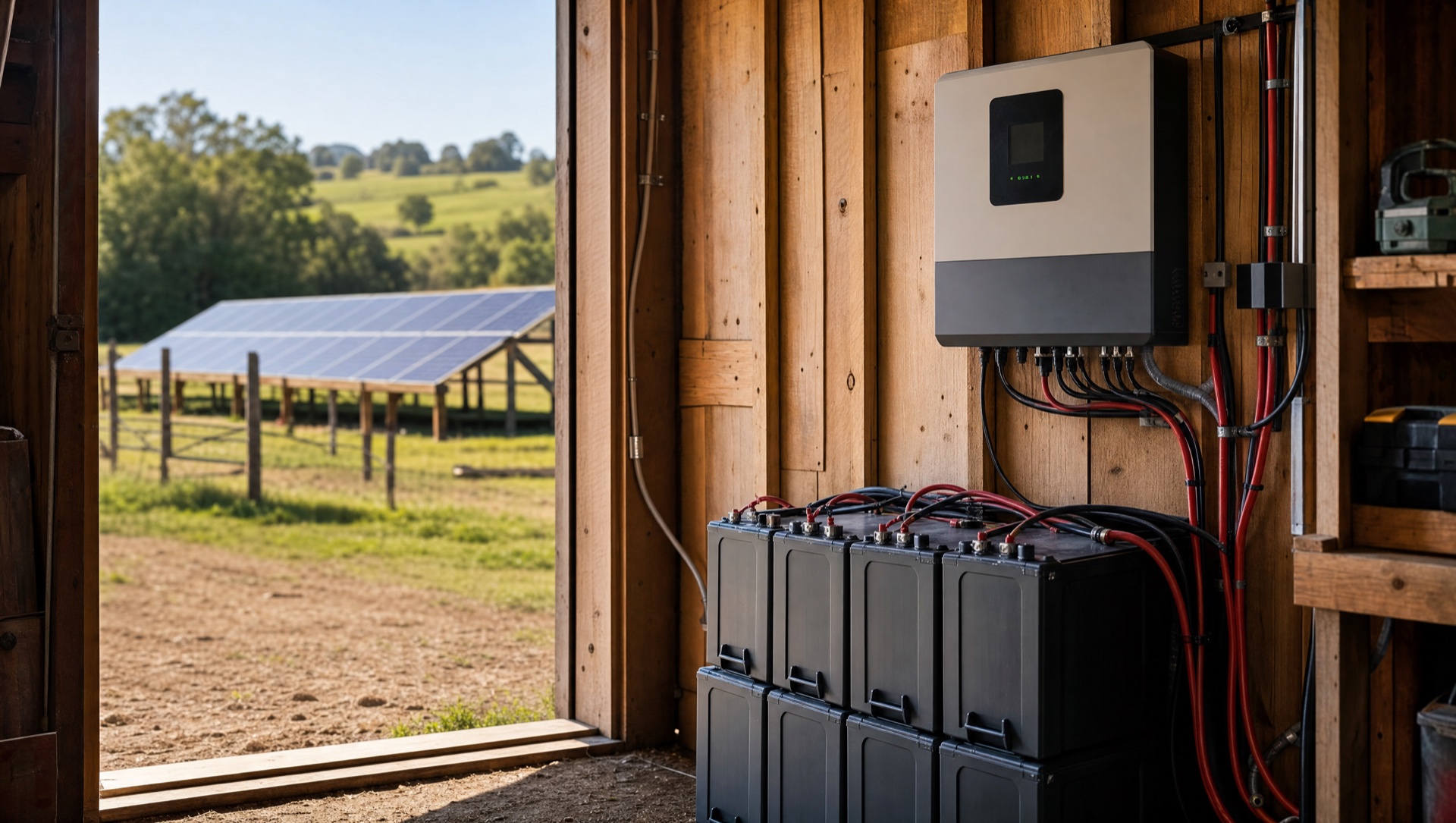
In plain English: if a solar inverter is already on the market today and has an FCC ID, it is business as usual. You can still buy it from retailers like Signature Solar or others. Distributors can still import it. Your existing home battery backup system is not affected. Nothing gets shut off. Nothing gets recalled.
Wall Street analysts agree this is not an emergency. TD Cowen managing director John Miller told Canary Media: “In our world, investors are currently seeing this as kind of a non-event.” Jefferies analyst Julien Dumoulin-Smith wrote: “This has a minimal impact today. There seems latitude to continue to purchase existing inverter models on the market.”
Does the FCC Inverter Ban Affect Off-Grid or Just Grid-Connected Inverters?
TL;DR: The ban targets any inverter with Wi-Fi, Bluetooth, or cellular capability, which includes most modern off-grid inverters, but pure off-grid inverters with zero wireless communication appear to be exempt.
This is probably the most common question I have seen in the DIY solar community, and the answer is more nuanced than a simple yes or no. The official definition in the National Security Determination (page 4) defines a power inverter as a device that meets BOTH of these conditions:
- It is a bi-directional power device that converts DC to AC or AC to DC, including microinverters, string inverters, central inverters, and hybrid (battery-based) inverters.
- It contains components that enable remote communication, control, sensing, data collection, or monitoring through Wi-Fi, cellular, Bluetooth, or other similar connections.
Notice the word and. Both conditions must be met for an inverter to fall under the ban. That means:
- Inverters WITH wireless communication (Wi-Fi, Bluetooth, cellular, cloud monitoring apps, remote firmware updates) are covered by the ban if they are foreign-produced new models.
- Inverters with NO wireless communication at all (no Wi-Fi, no Bluetooth, no cellular, purely local on-device controls) appear to fall outside the scope, because they fail condition number two.
pv magazine USA confirmed this in its editor’s note (published July 29, 2026), stating the restriction “specifically targets networked power inverters with remote communications, data transmission, or firmware update capabilities. Equipment lacking remote control features, or utilizing air-gapped external control architecture, remains outside the security determination.”
Here is the catch for off-grid DIY solar: Most modern off-grid inverters that you and I use do have Wi-Fi or Bluetooth for monitoring apps and firmware updates. Even if you are using them off-grid, they still meet condition number two because they contain wireless communication components. The rule does not distinguish between grid-tied and off-grid use cases. It is based on (1) where the inverter is manufactured and (2) whether it has wireless communication capability. It does not care what you do with the inverter.
Bottom line for off-grid solar:
- Pure off-grid inverters with NO wireless capability at all: likely exempt from the ban.
- Off-grid inverters WITH Wi-Fi or Bluetooth (which is most modern ones, including popular models used in budget DIY solar builds): technically covered by the rule, but existing approved models are still completely legal to buy, sell, import, and use.
- The rule does NOT distinguish between grid-tied and off-grid use cases. It does not care whether your inverter is connected to the grid or running standalone in a barn.
Is the FCC Inverter Ban Country-Specific? No, It Applies to ALL Foreign Inverters
TL;DR: This is not a China ban. It applies to inverters from every foreign country, including Germany, Austria, the Netherlands, and anywhere else outside the US.
This is one of the most surprising things about the ban. It is explicitly country-neutral. It is not a China ban, even though that is what Reuters originally reported was being drafted back in June 2026.
The National Security Determination states: “Power inverters produced in a foreign country, regardless of the nationality of the producer, pose an unacceptable risk to the national security of the United States.”
The FCC FAQ also states: “The nationality of the entity or entities producing the advanced robotic device or power inverter is not relevant to whether such devices are foreign produced.”
A senior FCC official told Bank Info Security on background that the restriction “affects any inverter with 35 percent of its components by value produced in a foreign country.”
What this means in practice:
- A Chinese company manufacturing in China: covered by the ban.
- A German company (like SMA) manufacturing in Germany: covered by the ban.
- An Austrian company (like Fronius) manufacturing in Austria: covered by the ban.
- An American company manufacturing overseas: covered by the ban.
- A foreign-owned company doing final assembly in the US that meets domestic content thresholds: NOT covered by the ban.
This is actually broader than what the European Union did in April 2026. The EU banned EU funding for projects using inverters from specific high-risk countries (China, Russia, Iran, North Korea). The US ban blocks the entire US market for ALL foreign-produced inverters, no matter where they come from. PV Tech reported that “the ban turned out to be much wider than previously reported and will affect all importing countries.”
What Counts as “Foreign-Produced”? The 65% Buy American Rule
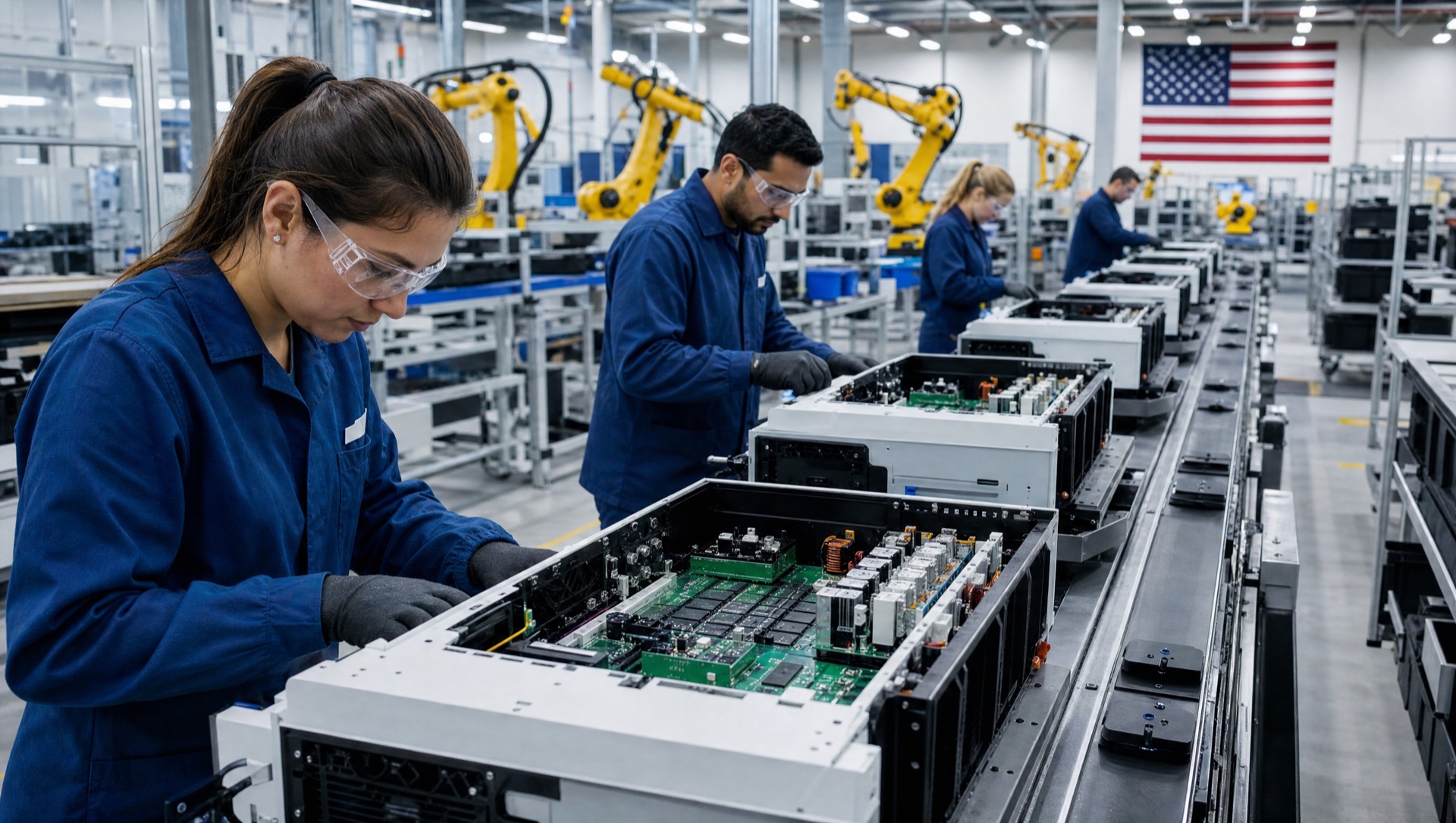
TL;DR: An inverter must be manufactured in the US with at least 65% of its component cost from US sources through 2028, rising to 75% in 2029, or it is considered foreign-produced and banned for new models.
The FCC determination uses the federal Buy American Standard definition from 48 CFR 25.101(a). Under this standard, a domestic end product must be:
- Manufactured in the United States, AND
- The cost of domestic components must exceed a certain percentage of the cost of all components:
- 65% for items delivered in calendar years 2024 through 2028.
- 75% for items delivered starting in calendar year 2029.
So a solar inverter is considered foreign-produced (and thus banned for new models) if it is manufactured outside the US, OR if it is manufactured in the US but less than 65% of its component cost is domestic through 2028, or less than 75% starting in 2029.
This is a very high bar. Most inverters labeled “assembled in the USA” still use foreign-made semiconductors, power electronics, PCBs, and other components. The Department of Energy’s own assessment, cited by the FCC in its determination, noted that “application-specific integrated circuits and semiconductor power-handling components are almost entirely produced outside the US.”
When Does the FCC Inverter Ban Go Into Effect? A Staged Timeline
TL;DR: The ban is effective immediately for new models, existing models are unaffected, manufacturers can apply for Conditional Approval through January 1, 2028, and the real impact hits when current models become obsolete in 1 to 3 years.
The ban is effective immediately as of July 28, 2026, for new equipment authorizations. There is no phase-in period for the Covered List restriction itself. But the FCC and the interagency body built in several practical mechanisms that create a staged effect.
Stage 1: Right Now, New Foreign Inverter Models Are Blocked
- Any new solar inverter model that has NOT already received an FCC equipment authorization (an FCC ID) is now blocked from receiving one if it is foreign-produced.
- The FCC will not accept or process new authorization applications for covered foreign inverters.
Stage 2: Right Now, Existing Inverter Models Are Unaffected
- All inverter models that already have an FCC ID are completely unaffected.
- They can still be imported, sold, marketed, and used.
- Retailers can continue selling them. Consumers can continue using ones they already own.
Stage 3: Conditional Approval Window (Through January 1, 2028)
Foreign manufacturers can apply for Conditional Approval from the Department of War (formerly DoD) or DHS. If approved, their specific inverter models can continue to receive FCC authorizations during a transition period. The Annex A guidance document outlines the requirements:
- Applications must be submitted by January 1, 2028.
- Manufacturers must disclose their complete corporate structure and ownership, including beneficial owners and any foreign government influence.
- Manufacturers must provide a full bill of materials with country of origin for every component.
- Manufacturers must disclose all software and firmware origins.
- Manufacturers must submit a binding, time-bound plan to move manufacturing to the US.
- Manufacturers must open their entire supply chain and firmware architecture to federal auditors.
- Manufacturers must report quarterly on onshoring progress.
- Submission does not guarantee approval. All decisions are final.
Stage 4: The Future, When Existing Models Become Obsolete
- Eventually, currently approved inverter models will become obsolete and manufacturers will need to release new models.
- When they do, those new models will hit the Covered List wall unless the manufacturer has received Conditional Approval or has moved production to the US.
- Wood Mackenzie analyst Joe Shangraw told Canary Media: “Eventually, currently approved products will become obsolete, probably not in the next couple months but in the next year or so.”
- If the federal government sets new cybersecurity or grid functionality requirements that require hardware changes, that could force new model filings sooner than expected.
Timeline summary:
- July 28, 2026: Ban effective immediately for new foreign inverter models.
- July 28, 2026 onward: Existing FCC-approved inverter models continue to be sold and imported normally.
- January 1, 2028: Deadline for manufacturers to apply for Conditional Approval.
- Through 2028: 65% domestic content threshold applies for US-made inverters to qualify as “domestic end products.”
- January 1, 2029: 75% domestic content threshold kicks in.
Will the FCC Inverter Ban Create a Supply and Demand Problem for Solar?
TL;DR: The US only makes 7% of the inverters used here, so yes, supply issues are coming, but the impact is delayed because existing approved models are still flowing through the supply chain normally.
Yes, but the impact is delayed, not immediate. Here is what the data shows.
“The United States is experiencing an unprecedented surge in electricity demand driven by rapid technological advancements, including the expansion of artificial intelligence data centers and an increase in domestic manufacturing. This increase in demand, coupled with existing capacity challenges, places a significant strain on our Nation’s electric grid. Lack of reliability in the electric grid puts the national and economic security of the American people at risk.”
Executive Order 14262, cited in the FCC National Security Determination for Power Inverters, July 27, 2026
The Current US Solar Inverter Market
- In 2020, only 7% of US inverter shipments came from US-headquartered manufacturers (DOE data cited by the FCC).
- That means 93% of the US solar inverter market relies on foreign-produced inverters.
- Chinese companies (Sungrow, Chint Power Systems) dominate the utility-scale segment.
- German (SMA) and Austrian (Fronius) companies also have significant market share.
- US-based Enphase and Israel-based SolarEdge dominate residential rooftop solar.
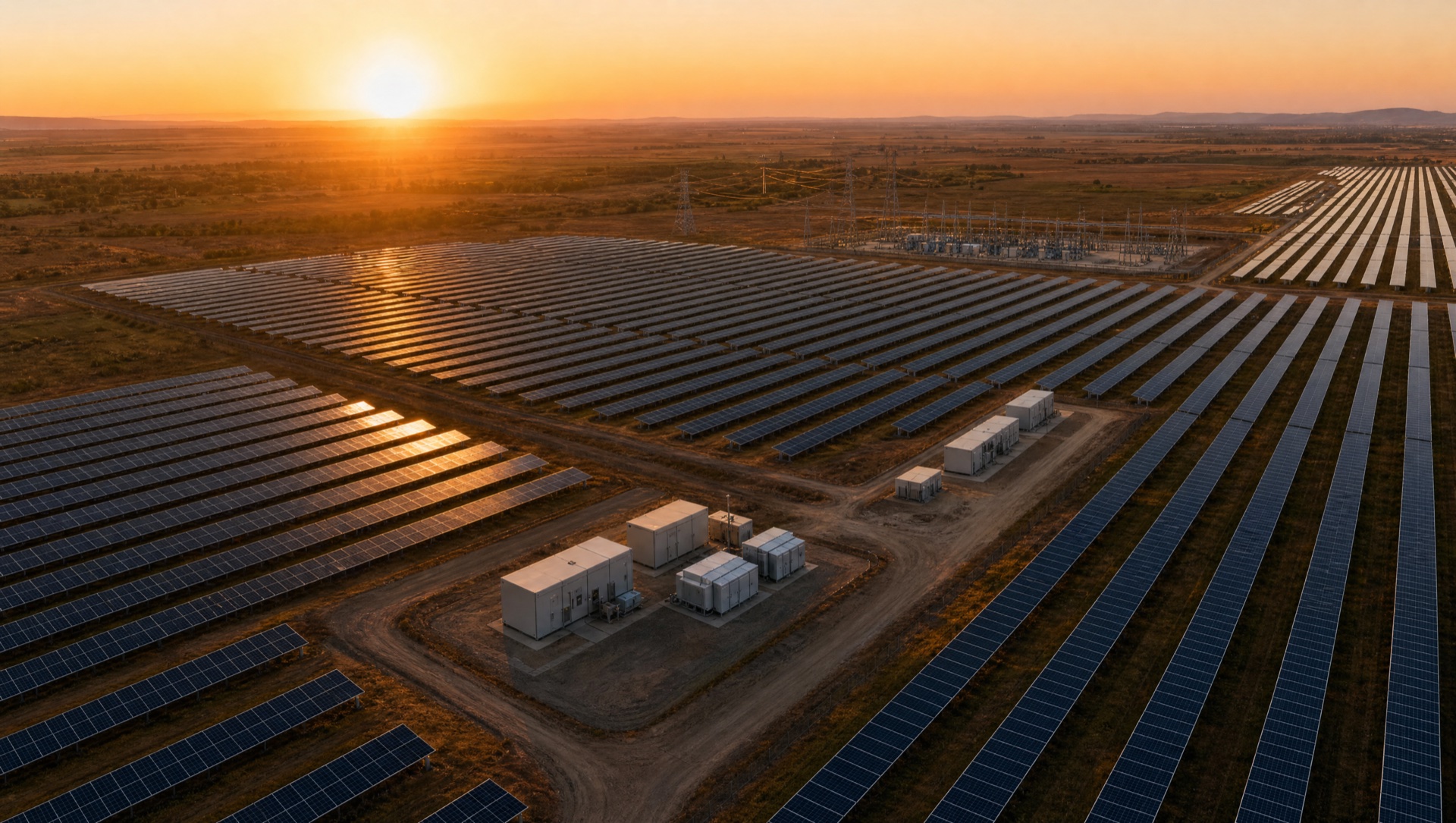
- The US plans to connect 58,658 MW of new solar and storage in the next 12 months (EIA data cited in the FCC determination).
Short-Term Impact on Solar Inverter Supply (Next 6 to 12 Months): Minimal
- TD Cowen analyst: “In our world, investors are currently seeing this as kind of a non-event.”
- Jefferies analyst: “This has a minimal impact today.”
- Existing inverter models with FCC IDs are still flowing through the supply chain normally.
- Most projects in the pipeline are using already-approved hardware.
Medium-Term Impact on Solar Inverter Supply (1 to 3 Years): Significant
- When manufacturers need to release new models (hardware refreshes, new features, new cybersecurity requirements), they will hit the Covered List wall.
- Domestic manufacturing capacity is insufficient. PV Tech Research forecasts the US will reach 40 GW of annual inverter capacity by end of 2026, still below the 43.4 GW of utility-scale solar forecast for 2026 alone.
- Residential solar is “in a good place” per Wood Mackenzie. SolarEdge, Enphase, and Tesla provide about 80% of US residential inverter needs.
- Utility and commercial scale is the problem. Chinese inverter makers hold about 60% of US market share in that sector.
Long-Term Impact on Solar Inverter Supply: Transformative
- This will force foreign manufacturers to either move final assembly to the US and meet the 65/75% domestic content threshold, apply for Conditional Approval and commit to onshoring, or exit the US market entirely.
- Companies like EPC Power, Tesla, GE Vernova, and NextPower are already scaling US inverter manufacturing.
- Spain-based Power Electronics is also scaling up US manufacturing.
- Reduced competition plus supply constraints likely means upward price pressure on solar inverters over time.
Why the Government Did This: Solar Inverter Security Concerns
TL;DR: The FCC cited rogue communication devices found in Chinese inverters, remote shutdown capabilities, 46 discovered vulnerabilities, and ERCOT warnings about grid collapse, even though the DOE found no malicious hardware.
The National Security Determination cites several specific concerns:
- Rogue communication devices found in Chinese inverters (Reuters, May 2025): Undocumented communication components were found in some Chinese inverters that could allow firewalls to be bypassed remotely.
- Remote shutdown capability: A non-US inverter manufacturer remotely disabled its inverters in the US and other countries following a dispute with a US distributor (Strider report, November 2025, cited by the FCC).
- 46 vulnerabilities found in solar inverters: Security research group Forescout found 46 vulnerabilities in solar inverters from three major manufacturers in 2025 that “could lead to grid disruption and potential blackouts.”
- ERCOT warning: The Electric Reliability Council of Texas said inverter-based resources tripping offline could lead to a rapid collapse of the ERCOT system in a worst-case scenario.
- DOE found no malicious hardware: Despite all the above, the DOE inspected about 30 Chinese inverters in January 2026 and found “no definitive evidence” of malicious wireless functionality. The White House interagency body determined that physical bugs do not matter because the risk is purely digital. The wireless connectivity itself is the vulnerability.
- AI data center power demand: The White House explicitly tied this to the AI race. Massive next-generation data centers are creating unprecedented power demand, and the administration is worried about both grid security and having enough inverters to meet electricity demand.
What the FCC Inverter Ban Means for DIY Solar: Specific Brands
TL;DR: All current EG4, Growatt, DEYE, Sol-Ark, and Victron models are still legal, but new models from these brands will be blocked unless they get Conditional Approval or move manufacturing to the US.
What You Can Still Do Right Now
- Buy any solar inverter that already has an FCC ID. This includes virtually every inverter currently on the market from EG4, Growatt, DEYE, MPP Solar, Victron, Schneider, Sol-Ark, and others.
- Use any inverter you already own. The ban explicitly does not affect consumer use of previously acquired devices.
- Sell and install existing approved models. Retailers and distributors can continue selling existing FCC-approved inventory.
What Could Become a Problem Later
- New models of foreign-made inverters will not receive FCC authorization. If your favorite brand releases a new inverter model next year and it is manufactured overseas, it would be blocked unless they get Conditional Approval.
- Firmware updates could become complicated. The FCC’s Covered List treatment can restrict post-authorization software and firmware changes. The FCC has issued waivers for drones and routers to allow continued firmware updates, but it is unclear whether similar waivers will be issued for solar inverters.
- Repairs and replacements could become harder if a manufacturer exits the US market.
- Prices could rise as supply tightens over time.
Specific Solar Inverter Brands We Care About
- EG4 (used in our 6000XP review and 12000XP review): Parent company Energy Access Innovations opened a 310,000 sq ft manufacturing facility in Commerce, Texas in 2025. Existing models are still legal. New models depend on whether Texas manufacturing meets the 65% domestic content threshold.
- Growatt: Manufactured in China. Existing models are still legal. New models are blocked unless Conditional Approval is granted.
- DEYE: Manufactured in China by Ningbo Deye Inverter Technology Co. Existing models are still legal. New models are blocked unless Conditional Approval.
- Sol-Ark: Based in Allen, Texas. Historically manufactured in China, but has moved production to Texas. Existing models are still legal. New models depend on whether Texas manufacturing meets the 65% domestic content threshold.
- Victron Energy: Manufactured in Netherlands. Existing models are still legal. New models are blocked unless Conditional Approval.
- SMA Solar Technology: German company, manufacturing in Germany. Existing models are still legal. New models are blocked unless Conditional Approval.
- Fronius: Austrian company, manufacturing in Austria. Same as SMA.
- Enphase Energy: US company, manufacturing in US and India. US-manufactured models may qualify as domestic. India-manufactured models would be covered by the ban.
- Tesla: US manufacturing. Likely qualifies as a domestic end product.
The Bottom Line: What DIY Solar Folks Need to Know About the FCC Inverter Ban
TL;DR: This is real but nothing changes today. Keep buying what you are buying. The squeeze comes in 1 to 3 years when current models become obsolete and manufacturers need new approvals.
- This is real, not fake news. The FCC published official documents on July 28, 2026.
- Nothing changes right this minute. Every solar inverter currently on the market with an FCC ID is still legal to buy, sell, import, and use.
- The ban only applies to NEW foreign-made inverter models going forward, not existing ones.
- It is not a China-only ban. It applies to all foreign-made solar inverters regardless of country of origin.
- Off-grid inverters are not explicitly exempt, because the rule targets any inverter with wireless communication capability, which most modern off-grid inverters have.
- There is a Conditional Approval escape hatch for manufacturers who commit to onshoring, with a deadline of January 1, 2028.
- Supply and price impacts are coming, but not today. The real squeeze happens in 1 to 3 years when current inverter models become obsolete.
- For DIY solar right now: keep buying what you are buying. All current models from EG4, Growatt, DEYE, Sol-Ark, Victron, and others are still available and legal.
I will keep watching this and update as more details come out, especially on the Conditional Approval process and whether any major inverter manufacturers apply. If you want to gear up for your next DIY solar project, check out shopeth.link for current links to Signature Solar and other distributors. If you are new to DIY solar and want to see how these inverters work in a real off-grid build, check out my EG4 6000XP review and my upgrade to the 12000XP. If you have questions about how this ban affects your specific setup, drop a comment and I will do my best to help you sort through it.
Watch the Full Video Breakdown
I walk through all of this in the video above, reading directly from the FCC documents and the article. If you prefer to watch instead of read, this covers everything in about 18 minutes.
Complete Source List: FCC Inverter Ban
TL;DR: Every claim in this article is backed by primary government documents and major industry sources linked below.
Primary Government Documents
- FCC Covered List page (updated July 28, 2026)
- FCC National Security Determination for Power Inverters (PDF, July 27, 2026)
- Annex A: Conditional Approval Guidance for Inverters (PDF, July 27, 2026)
- FCC Press Release (DOC-423682A1, July 28, 2026)
- FCC FAQ page on foreign-produced inverters and robotic devices
- FCC Public Notice (DA-26-786A1)
- FCC document page for the Covered List update
Industry and News Coverage
- pv magazine USA (July 28, 2026)
- Canary Media (July 29, 2026)
- Solar Power World (July 29, 2026)
- PV Tech (July 29, 2026)
- Reuters (June 30, 2026, original report on the draft ban)
- Reuters (May 2025, rogue communication devices in Chinese inverters)
- Stoel Rives law firm analysis
- Bank Info Security (July 28, 2026)
- RTO Insider (July 29, 2026)
- Forescout security research (46 inverter vulnerabilities)
- Forescout “Sun:Down” report
Legal and Regulatory Background
- Secure Equipment Act of 2021 (Pub. L. 117-55)
- Secure and Trusted Communications Networks Act of 2019 (Pub. L. 116-124)
- Buy American Standard, 48 CFR 25.101(a) (domestic content thresholds)
YouTube Comments
FCC Inverter Ban FAQs
Does the FCC inverter ban affect the inverter I already own?
No. The ban only applies to new inverter models that have not yet received FCC equipment authorization. Every inverter that already has an FCC ID is still completely legal to buy, sell, import, and use. The FCC press release explicitly states: “This action does not affect any previously purchased devices.”
Does the FCC inverter ban affect off-grid inverters or just grid-connected ones?
The ban targets any inverter with Wi-Fi, Bluetooth, or cellular communication capability, which includes most modern off-grid inverters. The rule does not distinguish between grid-tied and off-grid use cases. Pure off-grid inverters with zero wireless communication capability appear to fall outside the scope of the ban, but most modern off-grid inverters do have Wi-Fi or Bluetooth for monitoring apps and firmware updates.
Is the FCC inverter ban a China-only ban?
No. It applies to ALL foreign-made inverters regardless of country of origin. This includes inverters from Germany (SMA), Austria (Fronius), the Netherlands (Victron), and anywhere else outside the US. The FCC FAQ states: “The nationality of the entity or entities producing the power inverter is not relevant to whether such devices are foreign produced.”
When does the FCC inverter ban go into effect?
The ban is effective immediately as of July 28, 2026, for new equipment authorizations. Existing FCC-approved inverter models are unaffected. Manufacturers can apply for Conditional Approval through January 1, 2028, if they commit to moving production to the US. The real market impact hits in 1 to 3 years when current inverter models become obsolete and manufacturers need new FCC approvals.
What is the 65% Buy American rule for solar inverters?
To be considered a domestic end product and exempt from the ban, an inverter must be manufactured in the United States with at least 65% of its component cost from US sources through 2028. This threshold increases to 75% starting in 2029. Most inverters labeled “assembled in the USA” still use foreign-made semiconductors and power electronics, so meeting this threshold is very difficult.
Does the FCC ban affect Roomba vacuums or robotic lawnmowers?
No, Roomba vacuums are not covered by the ban. The FCC defines “advanced robotic devices” as mobile robots such as humanoids and quadrupeds that weigh over 4.4 lbs, have sensors, network connectivity of at least 200 kbps, and software controlling autonomous navigation. Most Roomba models are under the 4.4 lb weight threshold. Robotic lawnmowers are a gray area since they could technically meet the definition if they are foreign-made and have WiFi, but the FCC’s stated examples are humanoids and quadrupeds, not lawnmowers.
Will the FCC inverter ban cause solar inverter shortages?
Supply issues are likely in 1 to 3 years, but not immediately. The US only manufactures about 7% of the inverters used domestically, meaning 93% of the market relies on foreign-produced inverters. Wall Street analysts at TD Cowen and Jefferies are calling the short-term impact a “non-event” because existing approved models are still flowing through the supply chain. The real squeeze comes when current models become obsolete and manufacturers need new FCC approvals.
What specific inverter brands are affected by the FCC ban?
All current models from EG4, Growatt, DEYE, Sol-Ark, Victron, SMA, Fronius, Enphase, and others with existing FCC IDs are still legal to buy and use. New models from foreign manufacturers will be blocked unless they receive Conditional Approval from the Department of War or DHS. EG4 has a manufacturing facility in Commerce, Texas, but whether it meets the 65% domestic content threshold is not yet clear. Sol-Ark has moved production from China to Texas. Enphase and Tesla have US manufacturing that may qualify as domestic.
Does the FCC inverter ban affect UPS systems or portable power stations?
If a UPS system or portable power station has a built-in inverter with Wi-Fi or Bluetooth for firmware updates or monitoring, it technically meets the FCC definition of a power inverter: it converts DC to AC and contains components that enable remote communication. The ban as written does not distinguish between a wall-mounted solar inverter and a portable power station. However, the FCC’s stated concern is about grid-connected inverter-based resources, not standalone portable units. This is a gray area that the FCC has not addressed directly.
Can manufacturers bypass the ban by removing Wi-Fi or Bluetooth from their inverters?
This is a gray area. The FCC definition says the inverter must contain components that enable remote communication through Wi-Fi, cellular, or Bluetooth. If the wireless capability is a separate dongle or module that the manufacturer never installs, the inverter arguably does not meet the definition as manufactured. But if the inverter was sold with built-in wireless and you simply disconnect it, the FCC looks at the device as manufactured, not as modified. Removing built-in wireless from future models is one possible workaround, but whether the FCC accepts it depends on how they interpret the definition.
What about inverters with no wireless communication at all?
Inverters with no built-in Wi-Fi, Bluetooth, or cellular capability appear to fall outside the scope of the ban. The FCC definition requires the inverter to contain components that enable remote communication. If the inverter has no wireless capability at all, it fails that part of the definition and would not be considered a covered device. However, most modern inverters do include some form of wireless communication for monitoring apps and firmware updates.
Share
Recent Posts
October 1, 2026
STOP Doing This With Your Mr. Heater (Serious Safety Risk)
The dangerous Mr. Heater mistake I keep seeing: propane tanks brought indoors. Why it is a serious safety risk and the correct way...

October 1, 2026
How Long Does Propane Last in a Mr. Heater Big Buddy? (Run Times Chart)
How long will a Mr. Heater Big Buddy run on a 20 lb propane tank? Complete run time chart for low, medium, and...
August 3, 2026
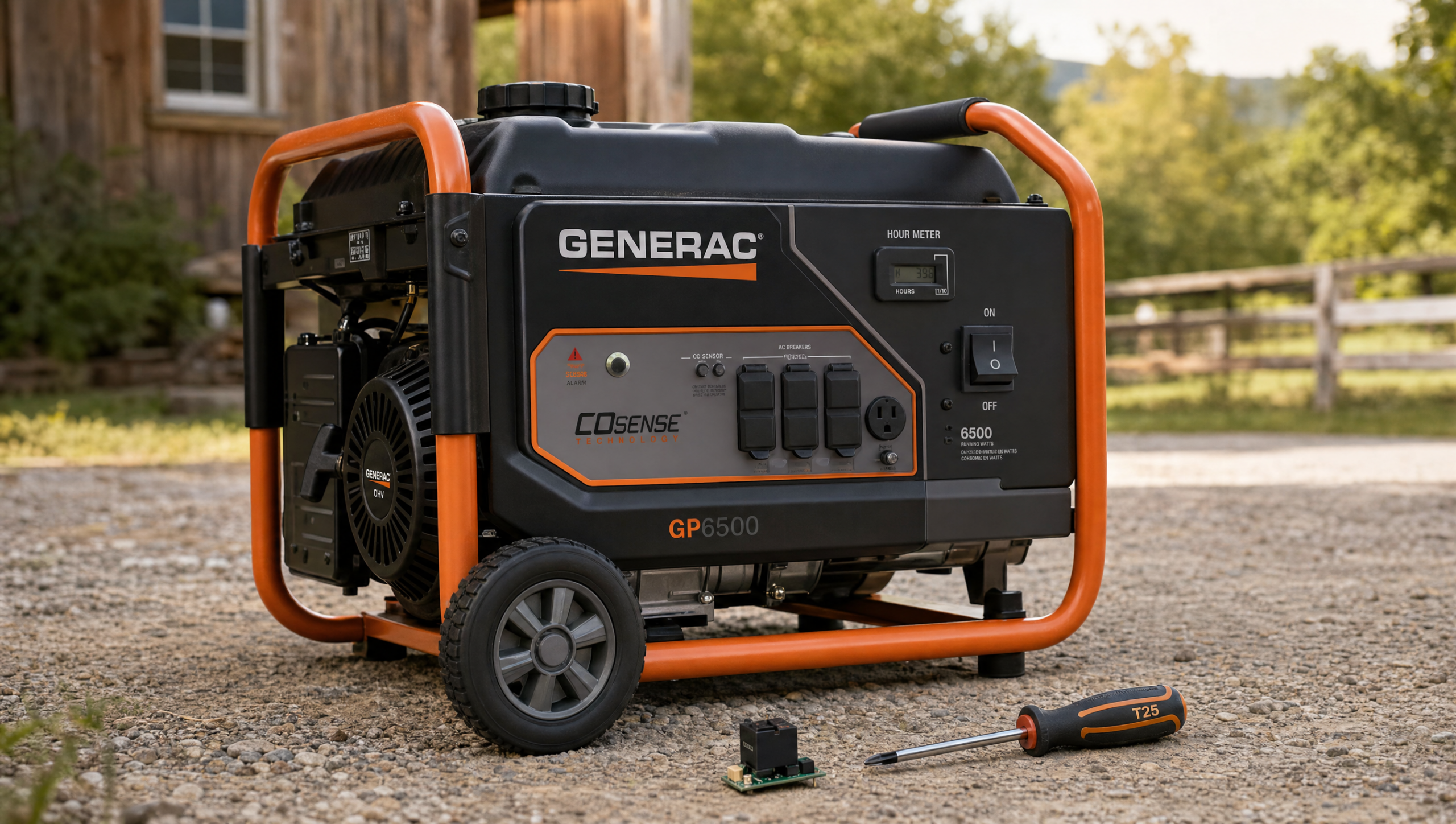
Generac Generator Starts But Won’t Stay Running? COSense Fix (GB6500)
Generac generator starts but won’t stay running? The COSense board is likely failed. Here is a step-by-step fix for the Generac GB6500 and...